Why I Stopped Using Budget ANC Headphones to Block Out My Roommates
If you only keep them safely on your desk, budget active noise cancelling might work. However, if you must carry your gear through harsh weather or wear them for hours to block out roommates, I am moderately confident you should switch to passive noise isolation instead.
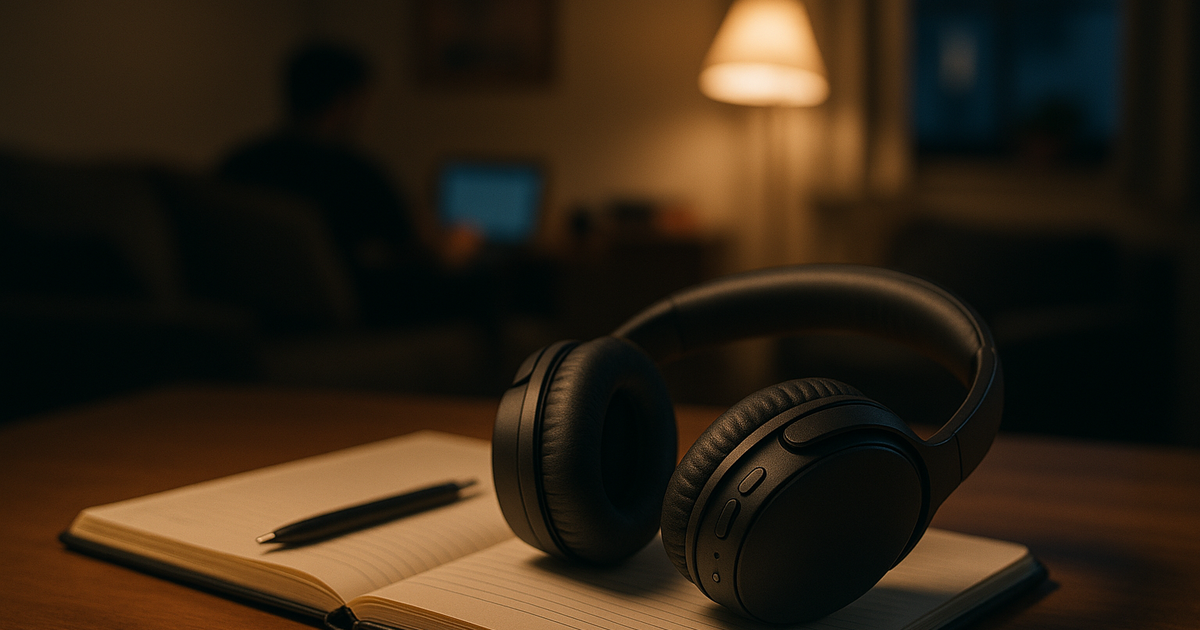
Why I bought it (context + expectation)
It was 11:30 PM on a Tuesday, and my two roommates were watching a loud action movie in the living room next to my thin drywall door. Because my F-1 visa strictly limits my work hours to campus jobs, my free time is heavily restricted, meaning I had to study for my statistics midterm right at that moment. I needed absolute quiet. As an international student in Buffalo, I check warranty and used prices first when solving a problem. I checked warranty and repair before hype, eventually allocating a strict maximum of $100 from my limited earnings to find a solution. The Anker Soundcore Life Q30 cost $79.99, which fit my tight monthly budget. Shared housing changes what is practical, and I cannot simply demand total silence from the people I live with. Predictability is safety for me, so I genuinely hoped a one-time hardware purchase would resolve my nighttime quiet needs permanently.
How long I used it (timeline + frequency)
I relied on these headphones almost every evening for roughly three months. Initially, the battery life was a massive relief, allowing me to grind through long weekend reading sessions without constantly searching for an outlet. I took them everywhere, packing them securely into my bag for library sessions and pulling them out whenever our apartment grew too chaotic. I need one more term to confirm exactly how quickly the internal battery degrades, but the physical wear and tear on the exterior became obvious far faster than I originally anticipated.
Is it worth it (real gain)
Is spending $79.99 worth the temporary peace? For short, isolated bursts of focus, it can be, but I avoid tools that create surprise costs. As an international student in Buffalo, the hidden cost was the rapid ear pad degradation. Evidence shows that if your ear pads get damaged or dirty, the sound becomes muffled and the noise cancellation effectiveness drops sharply. Having to constantly wipe them down to maintain the ANC, or eventually order $15 replacement pads, violates my goal of keeping weekly maintenance under 35 minutes. A good decision should survive exam season, rather than requiring me to hunt down spare parts during finals week just to keep the ambient noise out.
Pitfalls (hidden costs + friction)
It was late January, during a brisk walk across the North Campus. A sudden gust of wind blew a heavy layer of wet Buffalo winter slush directly against my backpack. Arriving at the library, I pulled out my headphones and realized the earcup casing was slightly damp. Panic set in immediately, because these affordable models explicitly lack dust or water resistance, making them incredibly vulnerable in this harsh environment.
Beyond the physical fragility, there is a distinct biological cost to wearing them. Active noise cancellation technology can create a disorienting pressure sensation in your ears. After an hour of studying, I would frequently develop a mild pressure headache, forcing me to toggle the ANC intensity down—which just let the roommate noise right back in. Furthermore, the closed-back plastic earcups tend to overheat over extended sessions, requiring annoying periodic rests to let my ears cool down.
Long-term changes (30/90/180 days)
Dealing with the continuous pressure headaches completely altered how I approach my study schedule. Instead of trying to electronically erase the loud environment around me, I learned that I choose stable routines over flashy upgrades. I shifted my most intensive, high-focus reading hours to early mornings when the apartment is naturally asleep, rather than fighting the evening television noise with technology. The headphones became a highly situational tool for short tasks, rather than my primary, all-night defense mechanism.
Who this is not for (clear boundary)
If your daily commute involves wet, unpredictable winter weather, you should definitely avoid these. They are also a terrible choice for people who are sensitive to inner-ear pressure changes, as the active cancellation frequencies can be physically uncomfortable when trying to concentrate. Additionally, if you are someone on a strict budget who cannot afford to replace proprietary ear pads a few times a year, the ongoing upkeep will frustrate you. If costs or complexity drift, I stop.
Alternatives (safer options)
In shared campus life, simplicity often wins. I have largely switched to high-quality foam earplugs for my nighttime quiet needs. They cost roughly $5 for a massive jar, require absolutely zero battery management, and completely bypass the weird cabin-pressure sensation of ANC technology. For listening to recorded lectures, I use basic passive noise-isolating wired earbuds. They seal the ear canal naturally, block out a highly reasonable amount of background chatter, and if they somehow get ruined by a stray splash of road salt, replacing them does not jeopardize my grocery budget.
One-line verdict (would I buy again?)
Budget ANC models offer great sound for the initial price, but the hidden maintenance costs and complete lack of weather resistance make them too risky for my daily campus carry.
Related navigation: Yuki persona channel, audio-noise-control cluster, nighttime-quiet-needs scenario.