I Bought a Multi-Mic Conference System for a 10-Person Office—And Promptly Returned It
In a small-team setup, infrastructure should disappear into the background. I recently deployed a high-end, multi-channel conference mic system to fix our hybrid meeting audio. It absolutely backfired. Two weeks of complaints and I change the plan. Here is why I boxed it back up.
Why I bought it (context + expectation)
It was a Tuesday at 9 AM in our Salt Lake City office, right at the start of our weekly all-hands. Our lead developer, joining remotely, interrupted three times because he couldn't hear the marketing update. I spent the next fifteen minutes troubleshooting wireless receiver channels instead of looking at our quarterly targets. If maintenance steals founder time, it is a bad bet.
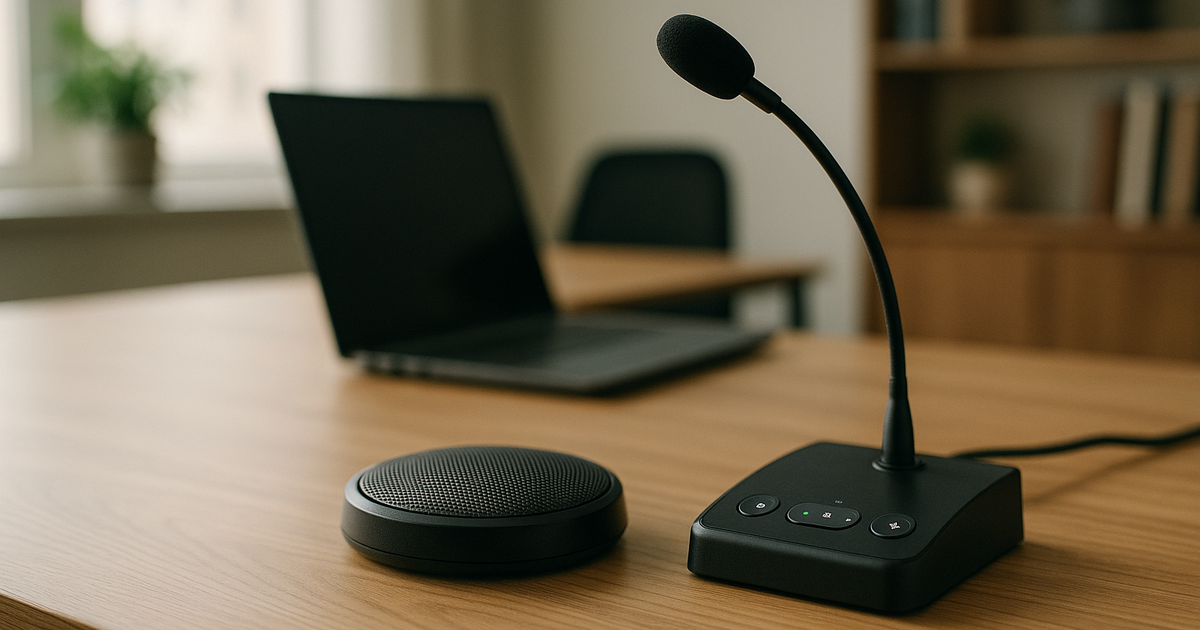
I initiated this purchase because I thought throwing professional-grade hardware at the problem would buy us seamless communication. The promise was tempting: a dedicated wireless conference mic system that eliminates messy cables and complex external mixers. I chased the idea of 24-bit digital audio and individual push-to-talk gooseneck mics. The logic seemed sound. Giving everyone their own dedicated microphone prevents the chaotic background noise you get from a cheap center-table speakerphone. I wanted to save meeting time by stopping the endless passing of a single microphone around the room. But I fund outcomes, not gadgets.
How long I used it (timeline + frequency)
The entire experiment lasted exactly nine days. That was enough time to set up the central receiver, distribute the individual wireless desktop units, and watch my staff actively avoid using them.
We ran about six formal meetings with the hardware. Early signal is positive usually, but not here. Every single session started with someone forgetting to turn their delegate unit on, or leaning back in their chair and instantly becoming inaudible. To get clear voice pickup, participants have to maintain a strict 6 to 12-inch distance from the mic while speaking directly into it. My team likes to stand up, pace, or lean over a whiteboard. The rigid physical constraints of the hardware clashed instantly with our actual hybrid office cadence.
Is it worth it (real gain)
Not even slightly. Runway discipline beats feature excitement.
When I put my founder/owner hat on, purchases are judged heavily on TCO per seat and the ongoing support burden. The upfront sticker price of a 16-channel wireless system is high, but the hidden cost is the sheer loss of operational momentum. For a 10-person team, the cost per seat per month is completely warped if I am spending two hours a week acting as an amateur AV technician.
We don't need a broadcasting studio. We just need to hear each other without lag.
Pitfalls (hidden costs + friction)
It was late Friday afternoon when I finally admitted defeat. I was standing in the office supply closet, staring at a massive Central Control Unit (CCU). I read the manual, which noted that these control units are designed to handle 80 to 120 delegate mics. We are a 10-person company. I optimize for team focus, not dashboard vanity, and I had clearly bought a wildly oversized solution.
The maintenance requirements were equally absurd. The documentation casually instructed us to store the units in a dry, dust-free area and wipe down the mic heads and bodypacks with a soft cloth after use. I am not paying my staff to polish audio equipment.
Beyond the physical upkeep, the technical pitfalls were glaring. If onboarding is heavy, adoption dies. Wireless systems operate in the 2.4GHz and 5GHz frequency bands, which meant they were fighting our office Wi-Fi routers for clean air. You can buy 900MHz systems to avoid TV broadcast interference, but it's just another variable to manage. Even when we looked at simpler USB alternatives like the Logitech Yeti X, we ran into exotic issues. It threw compatibility errors with our Mac OS laptops, and the physical mute button produced a loud, audible clicking noise over the call every time someone pressed it. If it breaks workflow, it’s not a small purchase.
Long-term changes (30/90/180 days)
This return completely shifted how I view meeting room technology. I used to think the best audio required a mic in front of every mouth. Now, I realize that home vs company purchases have to be mentally separated. A dedicated gooseneck mic might be incredible for a solo podcaster working from their basement, but it is a massive friction point for a collaborative, fast-moving group.
Moving forward, we are stripping the complexity out of our conference room.
Who this is not for (clear boundary)
Do not buy a multi-mic conference system if you run a small, agile team without a dedicated IT staff.
These are exotic, one-off machines that do not integrate cleanly with standard MDM or automated backup workflows. If your meetings involve people moving around, drawing, or brainstorming dynamically, static desktop mics will infuriate them. They are built for formal city council meetings, not modern hybrid startups.
Alternatives (safer options)
We are pivoting entirely to high-quality omnidirectional speakerphones.
Devices in this category sit in the middle of the table and capture voices from all around the room without requiring user intervention. You drop it on the desk, plug it in via USB or Bluetooth, and forget it exists. It balances participation between in-person and remote workers seamlessly. We lose the ultra-isolated 24-bit studio sound, but we gain back our sanity and our meeting time.
One-line verdict (would I buy again?)
Unless you are outfitting a massive corporate boardroom, skip the multi-channel mic setups and buy a premium omnidirectional speakerphone instead.
Related navigation: Ben persona channel, audio-noise-control cluster, hybrid-work-home-office scenario.