Why I Abandoned the AC-Purifier Combo Dream and Split My Setup
If you think a 2-in-1 AC and purifier saves space, check the math. I wanted a single unit for my Miami apartment, but combining climate control with air filtration spiked noise and replacement costs without actually delivering better air.
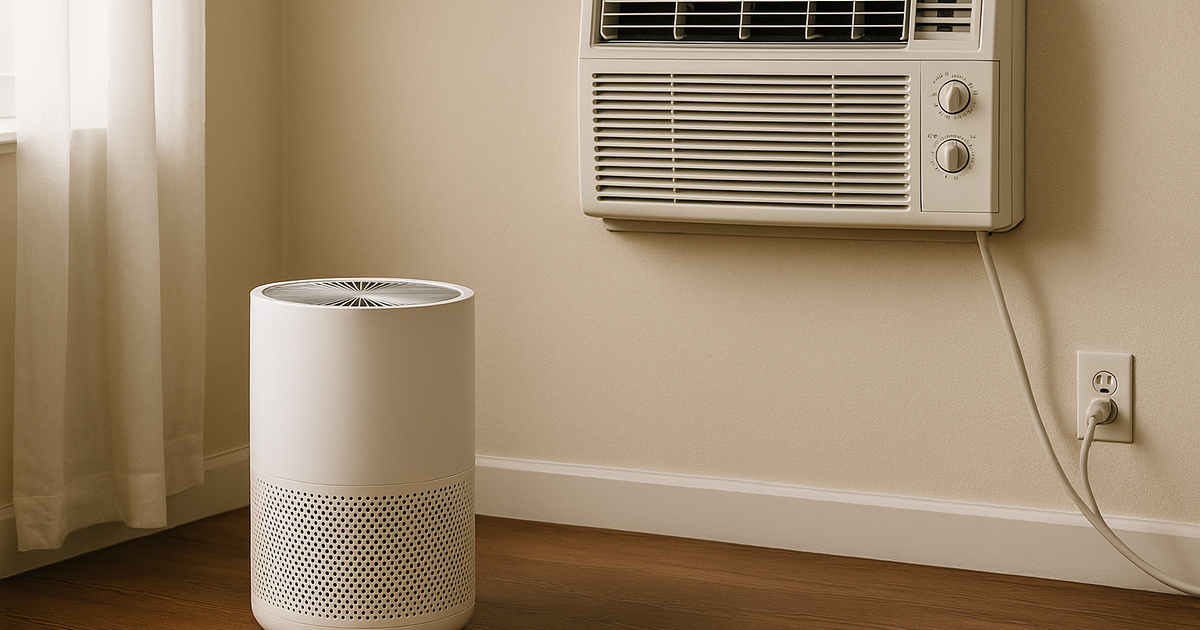
Why I bought it (context + expectation)
By late afternoon in my workspace, the sun bakes the glass next to my desk near windows, bringing an immediate condensation risk. When that heat hits, the cooling needs to ramp up hard. I initially wanted a 2-in-1 AC and purifier combo to handle the humidity load and filter the air without eating up floor space in my apartment. But I realized quickly that when a combo unit tries to cool a spiked room, it blasts both the cooling compressor and the purifier fan to maximum. Suddenly I'm dealing with 70 decibels of roaring wind on a Zoom call. Noise plus heat is a bad combo for focus. In Miami humidity isn’t a vibe—it’s a variable. I needed a setup that actually worked for my layout without driving me crazy.
How long I used it (timeline + frequency)
I started with kWh and filters, not spec sheets. I tracked kWh for a month before judging the standalone units I already had against the specifications of high-end combos like the Dyson TP07. That particular Dyson costs $649.99, which completely blows past my single-person budget cap of ~USD 280 for impulse buys, and testing shows it isn't even as effective as a 100% dedicated air purifier. Early results are solid when you look at the raw data for separated units: standard AC filters just catch large lumps of dust, while true standalone HEPA catches 99.97% of particles down to 0.3 microns. Combining them means your expensive HEPA filter degrades at the accelerated rate of your AC's airflow demand, not your room's actual air quality needs.
Is it worth it (real gain)
For my layout, absolutely not. I pay attention to comfort per dollar, and tying your air quality to your cooling cycle is inherently wasteful. If you run a combo unit on its highest setting to cool the room, you're pulling heavy wattage continuously. Industry testing explicitly recommends purchasing two separate devices for air purification and cooling, especially if you care about the actual performance. A standalone purifier is incredibly efficient, typically using between 30 and 100 watts—similar to a laptop. Running one continuously on its own only costs between $1.15 and $12.24 a month, depending on your local utility rates.
Pitfalls (hidden costs + friction)
On a Saturday morning, I was pulling the standard mesh filter out of my wall AC and looking at my utility bill for the month. It hit me that if I used a heavy-duty combo unit, the massive volume of air required for daily cooling would clog an expensive HEPA filter in weeks rather than months. If maintenance rises in summer, I simplify. That accelerated replacement cycle is a massive pitfall. Another major risk is unproven or irritating technology. Some air conditioners feature built-in ionization filters to clean the air, but these can produce small amounts of ozone, which is a known lung irritant. In a sealed apartment running a Miami humidity + AC always-on cycle, introducing ozone is a terrible idea.
Long-term changes (30/90/180 days)
I optimize settings around afternoon load. By keeping the devices separate, I can let the AC handle the heavy lifting of cooling and dropping the moisture levels, while a dedicated air purifier runs quietly in the corner. Dropping a standalone purifier to its sleep mode lowers its energy consumption to just 15 to 25 watts. That is an 87% reduction in electricity use compared to blasting a multipurpose fan on turbo. Humidity changes behavior faster than specs suggest, so I leave the cooling to the heavy hardware and let a dedicated HEPA filter handle the dust at its own steady pace.
Who this is not for (clear boundary)
This all-in-one approach is not for anyone who values utility bill predictability or cheap maintenance. It is also a poor choice if you work from home and require a quiet environment. Quality standalone purifiers can operate at 18.4 decibels on their lowest settings—quieter than rustling leaves and basically invisible in the background. A heavy-duty AC combo unit is going to be significantly louder whenever the compressor kicks in. Good airflow is non-negotiable on workdays, but it doesn't mean you have to endure a wind tunnel just to get clean air.
Alternatives (safer options)
Instead of chasing a magical 2-in-1, get a reliable standalone portable AC and a separate HEPA purifier. For cooling, something like the Midea Duo is highly rated for being relatively quiet—dropping to about 52 decibels in sleep mode—while still pulling moisture out of the air effectively. Pair that with a basic, affordable HEPA purifier that you can wipe down easily. I keep my gear practical; no corrosion-prone cheap metals, and nothing I can't maintain in under an hour a week.
One-line verdict (would I buy again?)
Splitting your cooling and purifying into two dedicated devices gives you maximum control over your airflow and your electricity bill; if running cost spikes, I reconfigure.
Related navigation: Omar persona channel, climate-air-water cluster, health-recovery-routine scenario.