I tested air purifiers for sleep quality. Here is why the data doesn't tell the whole story.
For my sleep window, a dark, quiet room is non-negotiable. I tested bedroom air purifiers to see if filtering dust actually improved my metrics. The short answer? Most modern units add too much light and noise. I protect sleep first, then optimize.
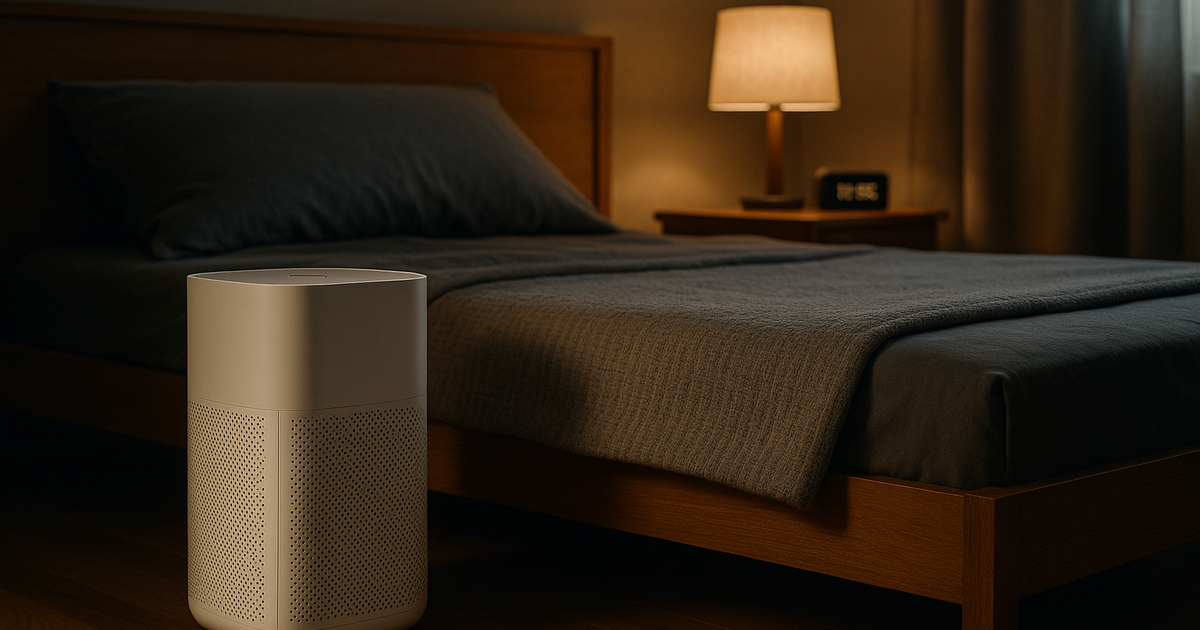
Why I bought it (context + expectation)
On a cold Thursday morning last November, I woke up at 4:30 AM for my usual run. My throat felt like sandpaper, my chest was congested, and my wearable's recovery score sat firmly in the red. I realized the stale air in my 1BR apartment might be actively sabotaging my rest. Being an early wake runner means my evening wind-down is non-negotiable, and I needed a cleaner environment to support that. Research claims a HEPA filter can remove allergens and theoretically improve sleep quality by eliminating respiratory irritants. I ran this for a month because sleep is noisy data, but I wanted to see if pulling dust out of the Denver air would give me a cleaner baseline. If recovery metrics improve, I keep it.
How long I used it (timeline + frequency)
I tracked the setup over a four-month period to gather a proper sample size. Early signal looks good on paper when you read clinical studies suggesting an air purifier can increase total sleep time by an average of 12 minutes per night. Finding a physical unit that actually let me test this without ruining my peace was frustrating. My budget was capped around $280, though the real cost was my patience. I had to monitor the decibels constantly, aiming for a model that reliably stayed under 30 dB on its lowest setting. I track trend lines, not one-night wins, so I committed to a long, careful trial.
Is it worth it (real gain)
To be completely honest, it depends heavily on your baseline environment and specific sensitivities. For my mild sleep maintenance insomnia, the constant whir of a fan can sometimes act as a soothing pink noise. People with severe allergies or sleep apnea aggravated by airborne irritants often find significant relief when filtering out particulate matter. The bedroom rule is fewer devices, not smarter devices. For the rest of us just looking for better rest, the benefits are much harder to isolate. I need longer baseline tracking to justify the permanent bedside clutter.
Pitfalls (hidden costs + friction)
At 2:15 AM on a Tuesday, my apartment living room purifier—which I had temporarily dragged into the bedroom—suddenly ramped its fan speed to maximum. The auto-mode sensor detected a shift in air quality, and a bright blue indicator ring instantly illuminated the ceiling. As a light sleeper with baseline anxiety about noise, my heart rate spiked immediately. If a tool adds stimulation at night, I am out.
Aggressive lighting is a massive flaw in this product category, far beyond just unexpected sensor noises. A bright LED panel at the foot of the bed drastically affects light sleepers. Another silent risk is ozone emission. Many ionizer-style purifiers produce ozone, which is a known respiratory irritant. You absolutely must stick to CARB-certified models to avoid lung irritation. Quiet consistency beats aggressive settings.
Long-term changes (30/90/180 days)
The biggest shift in my perspective was realizing that an air purifier doesn't solve my primary geographic problem. The Denver dry climate affects my nose and throat far more than standard apartment dust. Running a standalone fan all night just circulated aggressively dry air across my face. I eventually learned I actually needed to pair it with a humidifier to keep my throat hydrated, which introduces a lot of extra hardware.
Then there is the ongoing upkeep. Replacing HEPA filters every 12 months and active carbon filters every 6 months eats into my strict 50-minute weekly maintenance tolerance. My routine only works when friction stays low.
Who this is not for (clear boundary)
Skip this entirely if you are highly sensitive to ambient mechanical sounds or paranoid about EMFs. Even though the motor radiation is minimal and generally deemed safe, it still exists, requiring you to distance the unit from your bed. It is definitely not for anyone who hates light pollution or refuses to cover control panels with electrical tape. If sleep quality drops, I stop.
Alternatives (safer options)
Instead of dropping cash on a high-tech smart purifier, consider a basic analog humidifier. It solves the dry air issue without connecting to your Wi-Fi or glowing in the dark. If you just need background sound to mask street traffic, a dedicated white noise machine or a standard box fan provides better acoustic masking without the expensive, recurring filter replacements.
One-line verdict (would I buy again?)
Unless you have documented allergies that require strict particulate filtering, the added noise, light pollution, and maintenance of an air purifier aren't worth disrupting a dialed-in sleep routine.
Related navigation: Kevin persona channel, climate-air-water cluster, health-recovery-routine scenario.