Why Standard Water Pitchers Failed My Shared Apartment
If you live completely alone, a compact water pitcher might be sufficient. But if you share your space, I do not recommend buying entry-level 5-cup models. The reality of roommate dynamics and the recurring price of proprietary filters quickly turn a cheap purchase into a daily frustration.
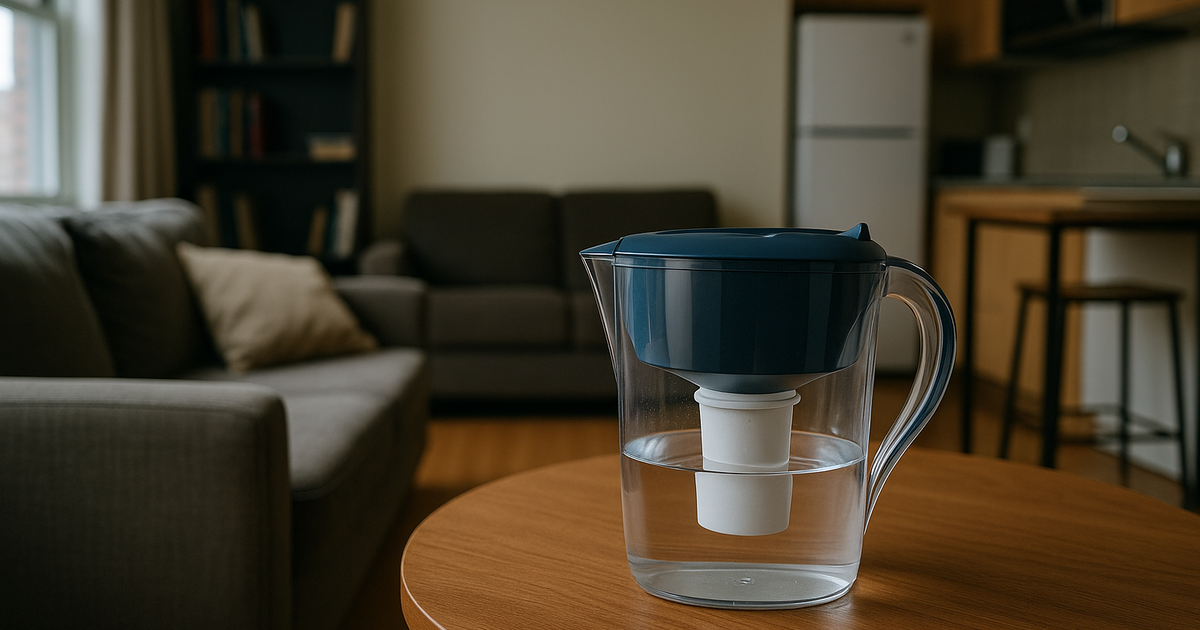
Why I bought it (context + expectation)
Last October, right in the middle of midterms, I walked into our off-campus shared kitchen. My roommate was aggressively digging for leftover takeout and accidentally knocked over our compact Brita pitcher. The flimsy lid popped right off, mixing unfiltered tap water entirely into the clean reservoir. I realized standard pitcher designs just aren't built for the chaos of three people sharing one cramped fridge shelf.
As an international student in Buffalo, I check warranty and used prices first before buying anything, but I completely overlooked the daily usage design. I originally bought the 5-cup model because it was cheap upfront and well under my $150 single purchase limit. Shared housing changes what is practical. A small footprint sounded great in the store, but it created an immediate bottleneck at home.
How long I used it (timeline + frequency)
I stuck with that pitcher for about four months, hoping our household would just adapt to the routine. According to the packaging, it holds five cups, which mathematically seems fine for basic hydration. My daily reality, however, involved constantly waiting for the slow drip every time I needed a simple glass of water.
Since I am an international student on a tight monthly budget, my work hours are limited by visa-adjacent rules, restricting me to a modest campus job. Every time I had to buy a proprietary replacement filter block, I deeply felt the financial pinch. Maintaining the pitcher took easily 35 minutes a week between the deep cleaning, scrubbing away hard water scale, and waiting for the small reservoir to process batches.
Is it worth it (real gain)
I am moderately confident that compact pitchers are a waste of money for shared apartments. Predictability is safety for me. When you rely on a system that requires constant $8 to $10 filter swaps just to maintain safe drinking water, your expenses become wildly unpredictable.
You are essentially locked into an ecosystem where the brand makes their real money on your ongoing thirst. I need one more term to confirm exactly how much money we threw away on replacements, but I already know it exceeded the initial price of the plastic pitcher itself.
Pitfalls (hidden costs + friction)
By late January, I was walking from the bus stop to campus with a portable plastic filter bottle acting as my backup. Carrying it in the side pocket of my backpack during a deep freeze was a terrible mistake. The plastic became incredibly brittle in the extreme cold, and a small bump against a library door frame caused a hairline crack.
Buffalo winter is a real variable, bringing salt, slush, and freezing dryness that effortlessly destroys cheap gear. I avoid tools that create surprise costs. Having a brittle plastic container leak near my laptop was a massive wake-up call regarding durability.
Beyond fragility, the biggest pitfall of the home pitcher was the empty pitcher syndrome. With two roommates, whoever pours the last drop rarely refills it, leading to passive-aggressive tension over a dry filter. If setup instructions are unclear, I hesitate, but if a simple tool creates roommate drama, I completely abandon it.
Long-term changes (30/90/180 days)
I completely changed my approach to drinking water at home. A good decision should survive exam season. We eventually asked our landlord if we could install a generic tap-mount filter, which completely eliminated the waiting time and the empty-pitcher arguments overnight.
For campus days, I upgraded to a heavy-duty stainless steel bottle. I choose stable routines over flashy upgrades, and filling a durable, non-filtering metal bottle at the campus hydration stations is vastly more reliable than trusting thin plastic in the snow.
Who this is not for (clear boundary)
I strictly advise against small-capacity pitchers if you live with roommates who are not disciplined about refilling chores. They are also a terrible match for anyone on a strict budget who cannot absorb the inflated recurring costs of name-brand, proprietary filter cartridges. Finally, if your weekly maintenance tolerance is low, scrubbing mold out from the tight plastic crevices of these pitchers will drive you crazy.
Alternatives (safer options)
Instead of a tiny pitcher, look into a high-capacity countertop dispenser that holds at least 18 to 20 cups, preferably one that accepts universal or generic filter replacements.
If your lease agreement permits it, a basic faucet-mounted filter is infinitely better for shared housing. As an international student in Buffalo, the hidden cost was always the proprietary upkeep, so prioritizing generic compatibility saves a huge amount of money over a two-year degree.
One-line verdict (would I buy again?)
Skip the entry-level compact pitchers if you share a fridge; invest in a high-capacity dispenser with generic filters instead, because if costs or complexity drift, I stop.
Related navigation: Yuki persona channel, climate-air-water cluster, student-dorm-shared-living scenario.