90 Days with the Waterdrop Pitcher in a Studio Apartment
In my Portland studio, counter space is scarce. Renting means dealing with aging pipes I cannot change. The $30 Waterdrop 10-cup pitcher offered a temporary bridge between the tap and my glass. Leaning yes with limits—it requires strict hygiene to justify its physical footprint.
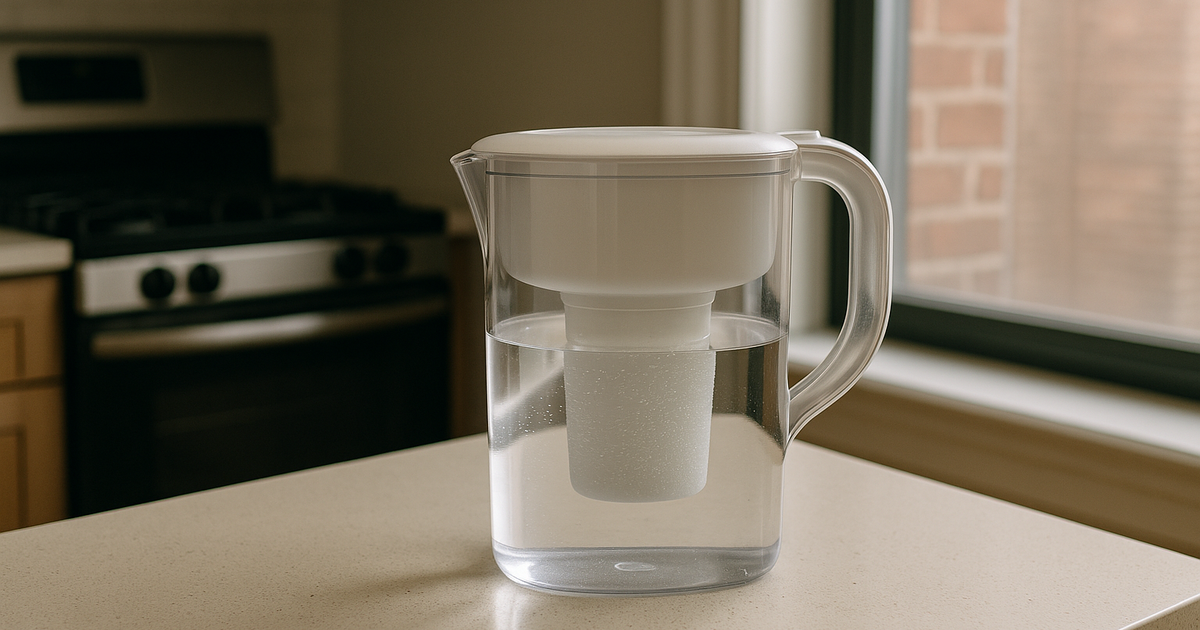
Why I bought it (context + expectation)
Mid-July. Standing in my kitchen. The municipal tap water smelled sharply of chlorine. I poured a glass straight from the tap, took one sip, and poured it down the sink. I needed filtration.
Space is my primary budget. I refuse to install under-sink systems that require plumbing modifications. Studio living + move every ~18 months risk dictates my choices. I needed something self-contained. Portable water filter pitchers are an inexpensive method of filtering water [EB1, EB2]. They fit inside a standard fridge [EB4].
Clean lines matter because habits follow environment. I chose the Waterdrop 10-cup model because it looked quiet visually. It removes basic aesthetic contaminants like chlorine [EB6]. If it reduces clutter, it stays.
How long I used it (timeline + frequency)
I tracked my usage over 90 days this summer. Daily operation became a fixed physical loop. Wake up. Fill the top reservoir. Wait.
The 10-cup capacity proved sufficient for one person. It held enough for my morning coffee, daily hydration, and filling the kettle. I did not need to interact with it constantly. Emptying and refilling it happened twice a day. The routine faded into the background. Minimal does not mean underperforming.
Is it worth it (real gain)
For $30, the math is straightforward. It eliminates the friction of buying bottled water. It reduces plastic waste instantly [EB9].
A tool must lower cognitive load, not raise it. This pitcher does exactly that by improving the taste and odor of tap water without an app, a cord, or an installation manual [EB7]. You fill it. Gravity does the work. Clean water. Done.
Pitfalls (hidden costs + friction)
One extra accessory can be one too many if it demands constant attention. Pitchers come with hidden costs.
First, they are notoriously slow. Filling them takes time, and you cannot pour water while the top reservoir is processing [EB14]. Tipping it spills unfiltered water everywhere. You have to wait.
Second, maintenance is non-negotiable. Filters remove protective chlorine. An unwashed pitcher becomes a verified breeding ground for bacteria [EB16, EB17]. My personal maintenance cap 40 min/week total applies to my entire apartment. To avoid violating this, I added the pitcher to my weekly dish routine. Washing the reservoir with warm soap and water takes three minutes [EB18]. White vinegar handles any mineral scale [EB21]. Hot water is strictly forbidden, as it damages the filter [EB26].
Long-term changes (30/90/180 days)
Late August. Prepping for a deep clean. I emptied the Waterdrop pitcher, dried the components, and set them on the bare counter. It looked incredibly simple. No complicated parts.
My consumption habits shifted subtly. Having cold, clean-tasting water readily available meant I drank more of it. I stopped second-guessing the metallic aftertaste of the old building pipes. I remove before I add. By adding this one item, I removed the mental friction of questioning my water quality.
Who this is not for (clear boundary)
First question: how many cubic feet and how many minutes per week?
If you hate washing dishes by hand, pass on this. Consistent maintenance is required [EB20]. If you skip cleaning, you are drinking contaminated water.
If you expect heavy-duty purification, look elsewhere. These filters are largely limited to chlorine and basic taste improvement [EB13]. They are not known to remove bacteria, viruses, or serious pathogens [EB15]. Do not buy this expecting laboratory-grade water sterilization.
Alternatives (safer options)
Before adding anything, I evaluate the market. I looked closely at the Brita Everyday Water Filter Pitcher.
Brita is the default name. It costs roughly $41. The footprint and capacity are nearly identical to the Waterdrop. I chose the Waterdrop to save $11. The aesthetic felt slightly more streamlined to me. Both function as basic, renter-friendly gravity filters. Neither locks you into a permanent ecosystem.
One-line verdict (would I buy again?)
A reliable, low-cost barrier against chlorine taste that demands minor weekly cleaning. If it adds another workflow, it goes.
Related navigation: Eva persona channel, climate-air-water cluster, frequent-relocation-rental scenario.