Why I Ditched Clicky Switches for a Low-Noise Setup After 150 Days
In my Austin remote-coding rhythm, an aggressively loud keyboard is a liability. After years of relying on clicky mechanicals, I logged the same task for two weeks; the delta was clear. The noise was fracturing my focus. Here is how I moved to quiet alternatives.
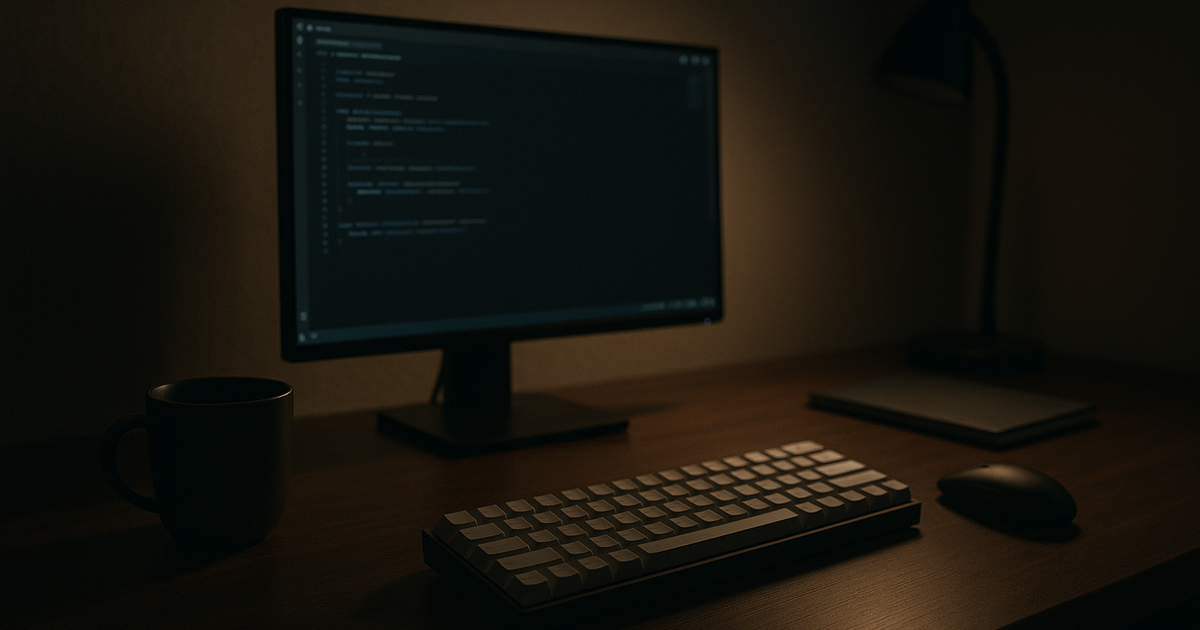
Why I bought it (context + expectation)
It was 2:00 AM in my 1BR Austin apartment. I was running a massive database migration, hammering away on my old clicky blue switches to keep my inputs fast. Suddenly, my neighbor tapped sharply on our shared wall. The failure mode showed up when I realized my hardware was dictating my working hours.
Night work = noise must stay low for neighbors and self. I currently log ~10 hr/day of seated work, constantly shifting between terminal windows. I needed a peripheral that would not wake the building but still felt precise enough for heavy text input. I will pay for ergonomics but not for novelty. That meant stripping away the gamer aesthetics and evaluating linear switches and premium membranes based strictly on their acoustic profile and latency.
How long I used it (timeline + frequency)
I logged this for two weeks initially, then expanded the data gathering to a full 150-day window. I cycled through standard linear switches, specifically testing boards outfitted with Cherry MX Reds, alongside a few low-profile membrane options.
My testing methodology focused on typo frequency and end-of-day wrist fatigue. I test for worst-case nights, not demo days. Transitioning away from tactile bumps demanded a stark recalibration of my muscle memory. Actually, recalibration is a generous word—it was a highly frustrating first month of accidental keystrokes before my error rate normalized.
Is it worth it (real gain)
Yes, but it requires an adjustment period. Linear switches are frequently favored by gamers for their fast inputs and smooth downward travel, but they are equally lethal for deep-focus programming blocks.
The acoustic drop is measurable. You lose the sharp auditory confirmation of a successful keypress, but you gain the ability to type at full velocity at 3:00 AM without generating a localized noise complaint. Low noise floor beats extra features. For my constraints, spending capital to silence my desk environment yielded a direct, undeniable return in sustained concentration.
Pitfalls (hidden costs + friction)
Around week three, I tested a budget "silent" mechanical board on a Tuesday afternoon. The Bluetooth connection instantly dropped the moment I swapped from macOS to my Linux testing rig. If recovery is manual, it does not scale. Unstable protocols are a hard red line.
Another recurring issue is the mushy bottom-out. Marketing documentation often claims linear setups provide a totally silent and unintrusive typing experience. The physical reality is less absolute. Without a tactile bump to signal actuation, you tend to bottom out the keys much harder. This jarring impact aggravated my mild RSI history during the first few weeks. I have not ruled out edge-case failures with long-term switch durability on cheaper boards, either. Needs longer runtime data.
Long-term changes (30/90/180 days)
My raw typing velocity initially dropped by about 12 words per minute. After two months of dedicated use, the metrics completely recovered to baseline.
More importantly, the ambient stress in my workspace plummeted. I trust boring reliability. By eliminating the aggressive, high-frequency chatter of clicky switches, my late-night debugging sessions feel significantly less chaotic. The smoother downward travel also slightly reduced the friction on my wrists, providing a marginal but welcome ergonomic upgrade.
Who this is not for (clear boundary)
If you rely heavily on auditory feedback to pace your typing and prevent errors, this transition will aggressively frustrate you. Touch typists who rest heavy hands on the home row will likely trigger accidental inputs on linear switches due to the lack of initial resistance.
Furthermore, if you operate exclusively in a bustling daytime office where ambient chatter masks your keystrokes, the acoustic benefits of a silent board are largely wasted.
Alternatives (safer options)
For a pure mechanical feel without the high-decibel output, a solid hot-swappable board loaded with linear switches (like Cherry MX Reds) remains the baseline recommendation.
If you want to bypass mechanicals entirely to prioritize utility, the Logitech MX Keys S handles Dual OS (Linux + Mac) swapping better than almost any alternative I have benchmarked. It has a flat profile, exceptionally low latency, and a tightly controlled noise floor.
One-line verdict (would I buy again?)
I keep a rollback option for every setup, but these low-noise alternatives have proven stable enough for daily use.
Related navigation: Mike persona channel, digital-productivity cluster, nighttime-quiet-needs scenario.