Why I Stopped Packing a Portable Monitor for Location Edits
Portable monitors aren't built for rugged on-location workflows. If you strictly edit in controlled hotel rooms, they function fine. But for outdoor shoots under direct sun, the screen glare and power drain make them a liability. Client days punish bad systems, and this secondary screen failed the test.
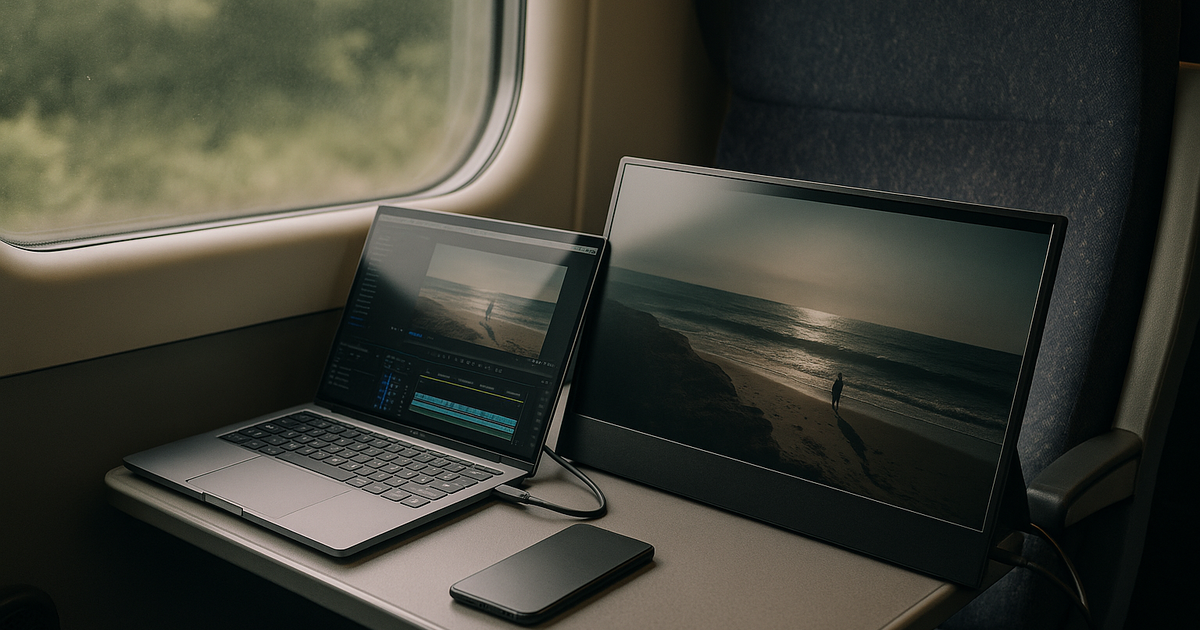
Why I bought it (context + expectation)
On shoot-heavy weeks, my Mac + pro storage workflow gets incredibly dense. Editing a massive 4K timeline on a single 14-inch laptop display feels restrictive when managing multiple bins and color grading panels. I assumed a second screen would speed up my turnaround.
I bought the SideTrak Solo Pro Touchscreen to see if expanding my digital footprint would justify the physical space in my bag. If I lose files, I lose trust—so I buy redundancy before speed, but I also need visual real estate to scrub through footage fast. I wanted to replicate my dual-monitor studio setup while sitting in rental cars and hotel lobbies.
How long I used it (timeline + frequency)
I spent 100 days dragging this setup across Southern California. When I first unpacked the monitor in my San Diego apartment, I noted the premium build quality and muttered to myself: "Looks workable so far."
Then the reality of on-site work set in. I tested the gear load across indoor studio sessions and harsh outdoor environments to find its actual breaking point. My goal was to see if the promised productivity boost outpaced the daily hassle of carrying and configuring extra hardware.
Is it worth it (real gain)
Late afternoon at La Jolla Cove brought harsh coastal sunlight bouncing directly off the water. Plugging in the SideTrak display to review dailies with the art director felt like a solid plan. It wasn't. The screen immediately became an expensive mirror because it completely lacks anti-glare technology. Squinting just to find my cursor was embarrassing. We eventually gave up and huddled over my laptop instead.
If setup steals editing time, it is too expensive. You can run Datacolor Spyder tools on these external panels to ensure your contrast and color gamut are perfectly accurate. But flawless color calibration means absolutely nothing if you cannot physically see the image through the environmental reflections.
Pitfalls (hidden costs + friction)
Midnight at a cramped Los Angeles hotel desk hit me with an immediate technical hurdle. While pushing through a heavy video render, the portable monitor absolutely tanked my Mac's battery. Draining my primary machine to power a secondary display is a workflow killer.
Most portable displays demand between 15 and 45 watts of power to run properly. To mitigate that massive drain, you have to carry a dedicated PD power bank with at least 20,000mAh capacity and a 30W output. Suddenly, my minimalist travel kit exploded into a web of cables.
The typical portable monitor weighs between 1.5 and 4 pounds. Adding the heavy backup battery, the cables, and the stand makes a massive difference. Weight is a tax on every shoot day, and these extra pounds actively flared up my lower back pain during transit.
Long-term changes (30/90/180 days)
Over three months, my initial excitement completely evaporated. A good tool disappears into workflow. This monitor constantly demanded my attention—whether I was shielding it from the dust and heat of desert shoots or stressing about scratching the screen in my bag.
While high-end units feature aluminum alloy bodies and 9H hardness scratch resistance, the internal lithium-ion batteries in some models only survive 300 to 500 charge cycles before dropping to 80% capacity. You are effectively buying a ticking clock.
When I return from a client day, I optimize for energy after long shoots. Fiddling with a multi-screen, cable-heavy mobile workstation drained my remaining patience. If it adds post-shoot friction, I remove it.
Who this is not for (clear boundary)
Do not buy this if you handle beach or desert photography. The environmental variables are simply too harsh for fragile secondary panels.
It is also entirely wrong for anyone trying to downsize their carry weight or protect a sensitive lower back. Reliability matters more than brand story, and relying on multiple failure points (extra cables, power banks, kickstands) while rushing to meet a deadline is a massive strategic error.
Alternatives (safer options)
If you absolutely must have a second screen for indoor, climate-controlled use, the Arzopa Z1RC is a much safer financial bet. Pricing out around $189, it offers a solid 16-inch IPS display with 2.5K resolution.
It won't survive a rugged location day, but it hurts your wallet significantly less when you inevitably leave it at home. Honestly, upgrading to a 16-inch MacBook has been my ultimate solution, eliminating the need for a secondary travel display entirely.
One-line verdict (would I buy again?)
The brutal screen glare and heavy power demands make portable monitors a pure liability for outdoor shoots; if it protects turnaround time, I keep it—this monitor went back in its box.
Related navigation: Theo persona channel, digital-productivity cluster, commute-and-business-travel scenario.