Why I Stopped Buying Cheap Folding Furniture for My Portland Studio
Before adding anything, I ask if it truly solves a problem. Folding furniture promises extra square footage, but cheap options fail basic stability tests. I do not recommend standard blow-molded plastic or particleboard folding pieces for daily apartment living. The trade-offs in durability ruin the intended simplicity.
Why I bought it (context + expectation)
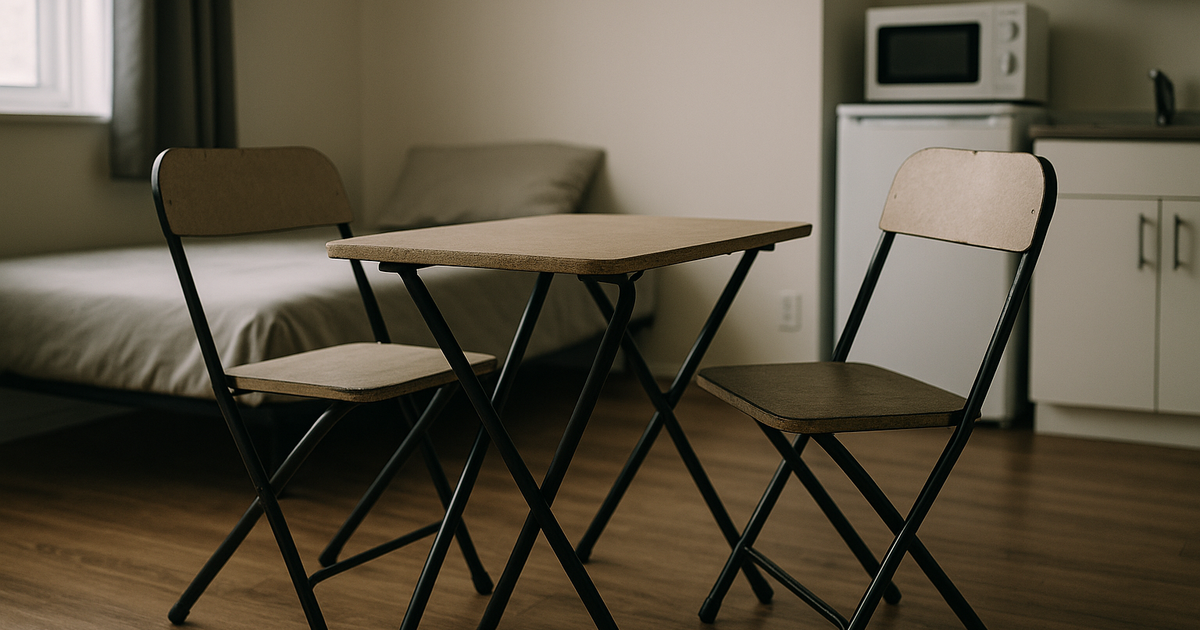
Packing for my last apartment move 16 months ago, I stood in my living area looking at a particleboard folding desk. The edges were chipped. The hinges groaned when lifted. I left it by the dumpster instead of loading it into the van.
Living in a studio means constantly fighting for floor space. I bought folding chairs and collapsible tables believing they would give me flexibility. A VECELO 39-inch folding desk seemed logical to fold flat against the wall. The idea was to tuck away my workspace at night. I wanted breathing room. The reality was a daily chore of setting up and breaking down a flimsy surface. It became an obstacle rather than an asset.
How long I used it (timeline + frequency)
I relied on various folding pieces over three lease cycles. Cheaper blow-molded plastic and particleboard tables broke down quickly. They often need replacing every single year.
Buying a new table every twelve months is a failure of intention. It violates my one-in-one-out rule for apartment goods. Constant replacement creates physical waste. It also demands frequent shopping research, which eats into my 40-minute weekly maintenance cap for managing my household.
Is it worth it (real gain)
Space is my primary budget. I initially thought folding items preserved that budget. They do not. The footprint cost was ultimately too high when factoring in the mental friction of daily setup.
Minimal does not mean underperforming. A table that cannot hold a laptop securely underperforms. While a high-quality commercial table might hold up to 2,000 pounds, the standard lower-quality plastic tables hold a mere 250 to 300 pounds. That indicates weak materials. Spending money on items susceptible to breaking is a poor investment. Leaning yes with limits only applies if you spend near my $260 single-purchase threshold on a truly heavy-duty option. Otherwise, the value is simply absent.
Pitfalls (hidden costs + friction)
Last Tuesday, I sat in my Portland studio trying to type on a portable drop-leaf table set to its tallest height. The surface shifted side-to-side with every keystroke. My water glass rattled. I packed it away immediately. A tool must lower cognitive load, not raise it.
Instability is the primary flaw. The tallest settings on standard folding tables often shake entirely too much for focused work.
Poor material quality is another issue. The Cosco Deluxe, for instance, uses a thin plastic tabletop. It frequently shows craftsmanship issues straight out of the packaging.
Size scaling can also be misleading. Many folding chairs stack neatly for storage but feel unexpectedly small for average-sized adults.
Long-term changes (30/90/180 days)
I abandoned the illusion of "temporary" furniture. Clean lines matter because habits follow environment. A permanent, sturdy piece of multi-use furniture anchors a room better than three collapsible items hidden in a closet.
I stopped treating my studio like a campsite. I now prefer fewer items with fixed, solid footprints. My environment feels calmer without the visual noise of hinges and folding legs. I am still validating long-term simplicity with this approach, but the daily friction of wobbly tables is entirely gone.
Who this is not for (clear boundary)
Do not buy cheap folding furniture if you plan to use it daily. It is not for anyone working from home full-time. If you type heavily, the wobbling will disrupt your focus.
Avoid these pieces if you value immediate readiness in your physical space. Unfolding a desk to check an email is inefficient. If it adds another workflow, it goes.
Alternatives (safer options)
I remove before I add. Instead of hiding a weak desk, I recommend a single, rigid table that serves as both a desk and a dining surface.
If you absolutely require a folding mechanism due to severe space limits, look for heavy-duty metal options. The Wohomo Folding Desk has a better track record for staying in one piece without cracking. It handles a laptop without buckling. High-weight-capacity steel chairs are also a safer bet. Standard steel folding chairs that meet ANSI/BIFMA standards can support a 500-pound static load, ensuring they survive daily wear.
One-line verdict (would I buy again?)
Skip the cheap collapsible plastic; invest your limited floor space in fewer, sturdier pieces that don't require daily assembly.
Related navigation: Eva persona channel, mobility-commute cluster, small-apartment-living scenario.