Why a Folding Storage Cart Failed in My Tiny Studio
I bought a folding storage cart thinking it would organize my rental. It didn't. In a tiny footprint, the constant wheel maintenance and rolling noise aren't worth the hassle. Skip this if you value quiet evenings and low upkeep.
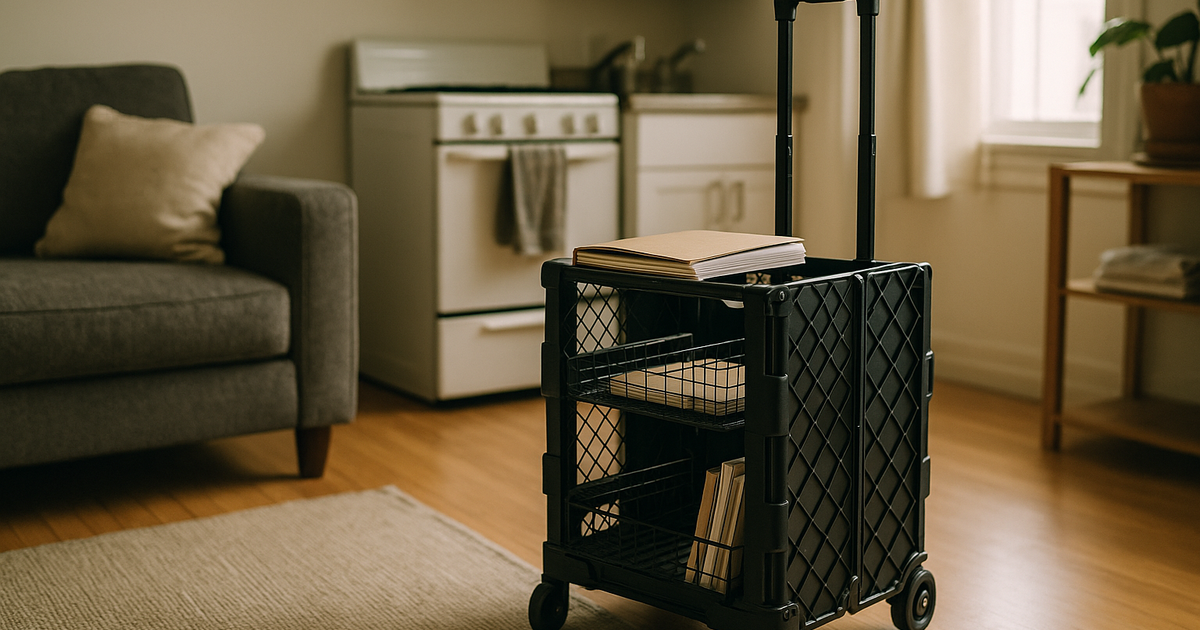
Why I bought it (context + expectation)
It was a Tuesday evening in my kitchenette. I was stacking pantry cans on the counter. The unstable pile collapsed, spilling tomatoes everywhere. I needed modular storage fast. In my LA studio, the limiting factor wasn't specs—it was upkeep. With barely 380 sq ft of space, I assumed a $40 folding cart would magically fix my spatial limits. I thought I could roll it out for cooking, then hide it away. My rule is simple: less friction or no deal. I am not fully sold yet on whether portable furniture actually reduces friction. Initially, it just seemed practical.
How long I used it (timeline + frequency)
I kept a brightroom metal utility cart active for about two months. I tracked its daily utility. The honeymoon phase faded fast. I thought the convenience would outweigh the clutter, then changed to realizing it was just a mobile junk drawer. The bottleneck was not specs, it was storage. Stashing a folded cart requires empty closet space. I didn't have any. Leaving it unfolded defeated the whole "collapsible" selling point.
Is it worth it (real gain)
The short answer is no. It is highly situational. A folding cart is a gimmick if you lack empty floor space. I track total effort, not feature count. Moving a loaded cart out of the way just to vacuum the rug adds annoying steps to basic chores. The frame also feels incredibly unstable if you push the load limit. Heavy-duty wagons boast tested capacities around 80 kg (176 lbs), but standard rental carts sag under a fraction of that weight. After four weeks, the real cost was the floor space it permanently hijacked.
Pitfalls (hidden costs + friction)
It was 10:45 PM on a Thursday. I shifted the cart slightly to reach a lower cabinet. The hard plastic wheels rattled loudly across the vinyl planks, and my downstairs neighbor thumped the ceiling in response. If it is loud after 10:30 PM, it is a no for me. Hard wheels transmit every vibration directly through the floorboards. That is the first major pitfall.
The second issue is wheel maintenance. Hair and floor grit wrap around the axles fast. You have to manually clean and lubricate the moving parts to stop them from locking up entirely. I have a strict combined gadget maintenance budget of ≤45 min/week. Digging dust out of casters eats heavily into that time. I do not buy tools that need babysitting. Finally, overloading causes the folding joints to wobble and the metal frame to bend out of shape.
Long-term changes (30/90/180 days)
My perspective on "mobile storage" completely shifted. I want static stability. I swapped the cart for vertical, fixed shelving inside my existing cabinets. I abandoned the fantasy of rolling my pantry around the apartment. The constant balancing act simply wasn't sustainable. Every time I bumped the cart, the uneven weight distribution made it vibrate violently. I realized that anything with moving parts in a small apartment just introduces mechanical failure into your living room.
Who this is not for (clear boundary)
Renters with hard quiet hours should avoid these. The rolling noise is impossible to mask without specifically installing soft polyurethane wheels. Anyone with limited floor space will absolutely hate them. If you cannot afford to permanently lose two square feet of floor, a folding cart won't help you. People unwilling to regularly align and clean caster wheels will find the steering becomes completely unmanageable. If the weekly hassle spikes, I switch.
Alternatives (safer options)
I abandoned carts entirely. I looked for fixed solutions. Over-the-door hanging organizers replaced my rolling pantry needs. They cost under $30 and require zero floor space. I also utilize stackable clear bins inside my closets. They don't have wheels to break. They don't require scheduled lubrication. If upkeep stays below my limit, I keep it. Static bins demand absolutely zero weekly maintenance.
One-line verdict (would I buy again?)
In a small studio, folding carts create more physical and acoustic clutter than they actually solve.
Related navigation: Lina persona channel, mobility-commute cluster, small-apartment-living scenario.