I Used a $40 Electric Toothbrush for Six Months—Here's the Reality for a Student Budget
On my student budget the real question was… is a $40 electric toothbrush actually worth it? The Oral-B Pro 1000 cleans great, but if your apartment walls are paper-thin, the noise might be a dealbreaker. I can live with this for now.
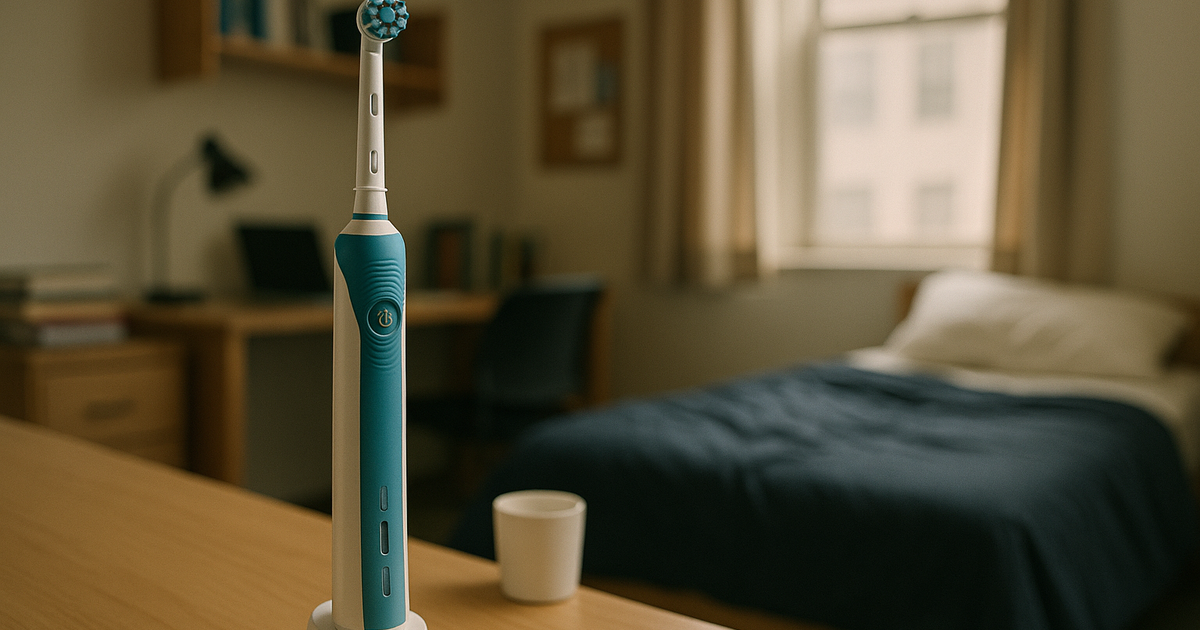
Why I bought it (context + expectation)
Last August, I was dragging my final cardboard box up three flights of stairs to my new off-campus place. I realized I’d accidentally thrown away my old manual toothbrush in the chaos. I buy what survives move-out day. That meant I needed something sturdy but cheap.
In my Chicago roommate + class rhythm… every dollar matters. My part-time income is not stable every month. I walked into the local pharmacy with a strict $120 impulse cap in mind, but honestly, even spending half of that on a toothbrush felt steep. Price first, regret later is not my style. The Oral-B Pro 1000 was sitting there for $40. I calculated cost per semester first, not launch MSRP. For twenty bucks a semester, I figured upgrading from a manual brush wouldn't completely wreck my grocery money.
How long I used it (timeline + frequency)
I have been using the Oral-B Pro 1000 twice a day for six solid months. It sits right on the edge of our tiny shared bathroom sink.
Good enough and durable beats premium features. This brush doesn't have Bluetooth or a touchscreen. It has exactly one daily cleaning mode and a built-in two-minute timer. That timer pulses every 30 seconds to tell you to switch to a different part of your mouth. For someone who usually rushes through brushing to get to an 8 AM lecture, that simple stutter-step vibration is a lifesaver. It forces me to actually pay attention.
Is it worth it (real gain)
For $40 upfront, the cleaning power is incredibly solid. It removes way more plaque than my old manual brush ever did.
Because my budget has a hard edge, I had to look at the ongoing math. Manual brushes cost me about $4 every few months. With this electric one, I only have to replace the brush head. That creates a lot less plastic waste overall, which is nice. However, a pack of name-brand replacement heads can run you $15 to $20. You have to factor that ongoing tax into your decision. Even with the hidden costs, my teeth feel professionally cleaned every morning. That alone makes the $40 entry price acceptable to me.
Pitfalls (hidden costs + friction)
It was 11 PM on a Tuesday during midterms. I flipped on the brush in the bathroom, and the heavy mechanical buzzing instantly vibrated through the thin drywall right into my roommate's bedroom. Roommate test: can I use this at 11pm? Barely. In a shared apartment with thin walls, noise is a hard filter. This thing is loud.
The second major trap is the maintenance cost. If replacement parts cost too much, deal is dead. I almost abandoned it month three when I saw the price of official refill heads at the drugstore. You have to hunt for sales online or buy generic heads to keep the semester-long value intact. Finally, the battery life is just okay. It lasts about a week on a charge, but the charging base is just one more wire cluttering our shared sink.
Long-term changes (30/90/180 days)
My main takeaway is that I don't bleed when I floss anymore. The machine-powered strokes do all the heavy lifting.
I used to scrub aggressively with manual brushes because I drink way too much coffee during finals. Now, I just hold the brush head against my teeth and let it work. It is undeniably gentler on my gums. My dentist actually noticed the lack of plaque build-up at my last cleaning, which saves me money on potential dental work down the line.
Who this is not for (clear boundary)
If you live in a dorm or a shared apartment with hypersensitive roommates, the motor noise of the Oral-B Pro 1000 will cause tension. It sounds like a tiny construction tool.
It is also not for people who travel constantly. The handle is bulky, and it doesn't come with a travel case. If you need something that slides seamlessly into a crowded backpack every weekend, you will hate this design. Finally, if you refuse to spend more than $5 a year on dental maintenance, stick to manual. The replacement head costs will frustrate you.
Alternatives (safer options)
If the mechanical noise is a dealbreaker, the Philips One Rechargeable is a fantastic pivot. It retails for about $35.
I need to compare one cheaper option first whenever I recommend things to friends. The Philips One is incredibly lightweight and uses sonic vibrations rather than heavy mechanical rotation. It is much gentler and significantly quieter, making it far superior for late-night brushing when your roommate is studying next door. It’s basically built for throwing into a backpack.
One-line verdict (would I buy again?)
It’s loud and the replacement heads aren't free, but the clean is fantastic. Good enough for the price, I keep it.
Related navigation: Nina persona channel, personal-care-health cluster, student-dorm-shared-living scenario.